Peptide vial
Freeze-dried powder, sealed with a flip-off cap.
Reconstitution guide
Every peptide ships freeze-dried. Here is a calm, step-by-step guide to mixing with bacteriostatic water for laboratory research.
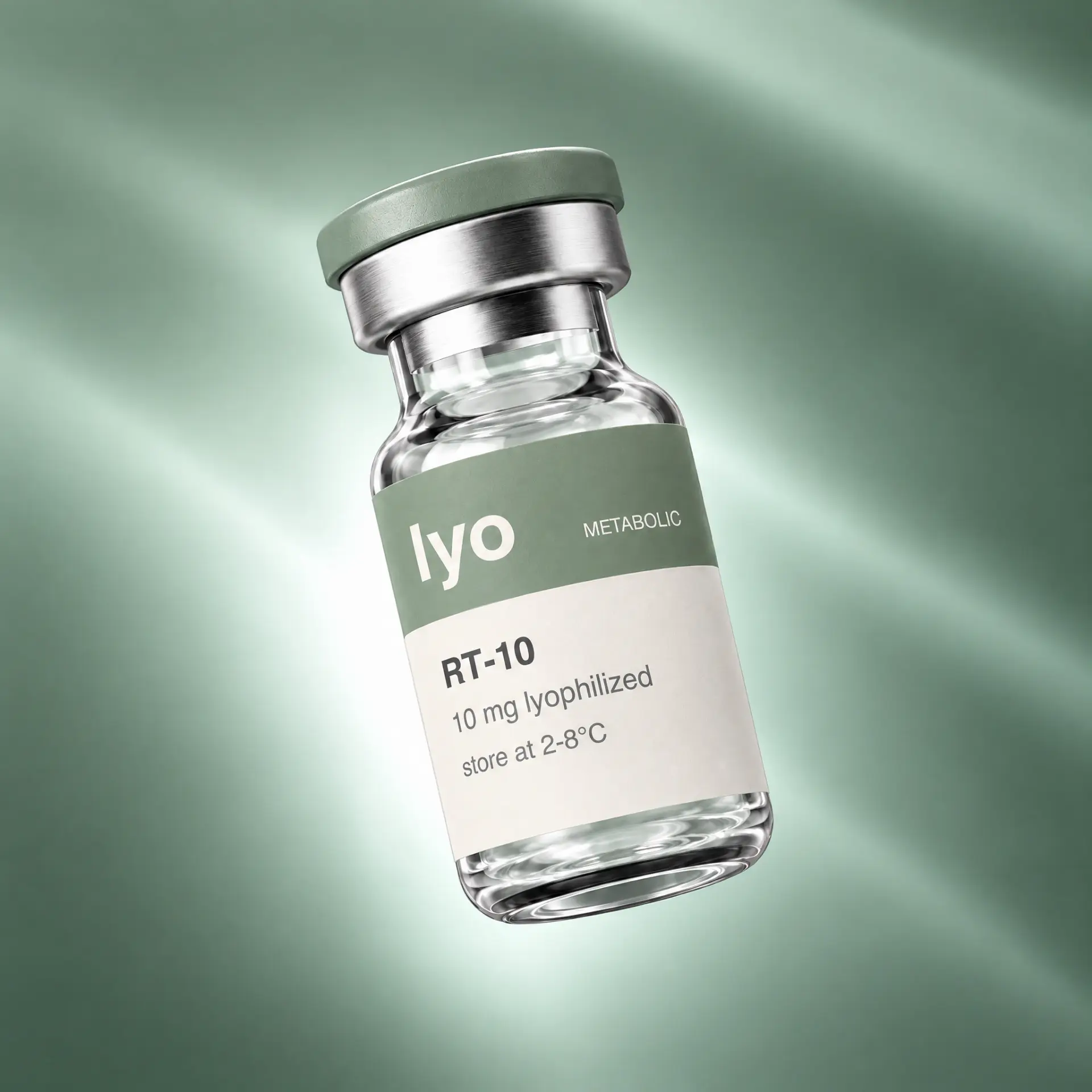
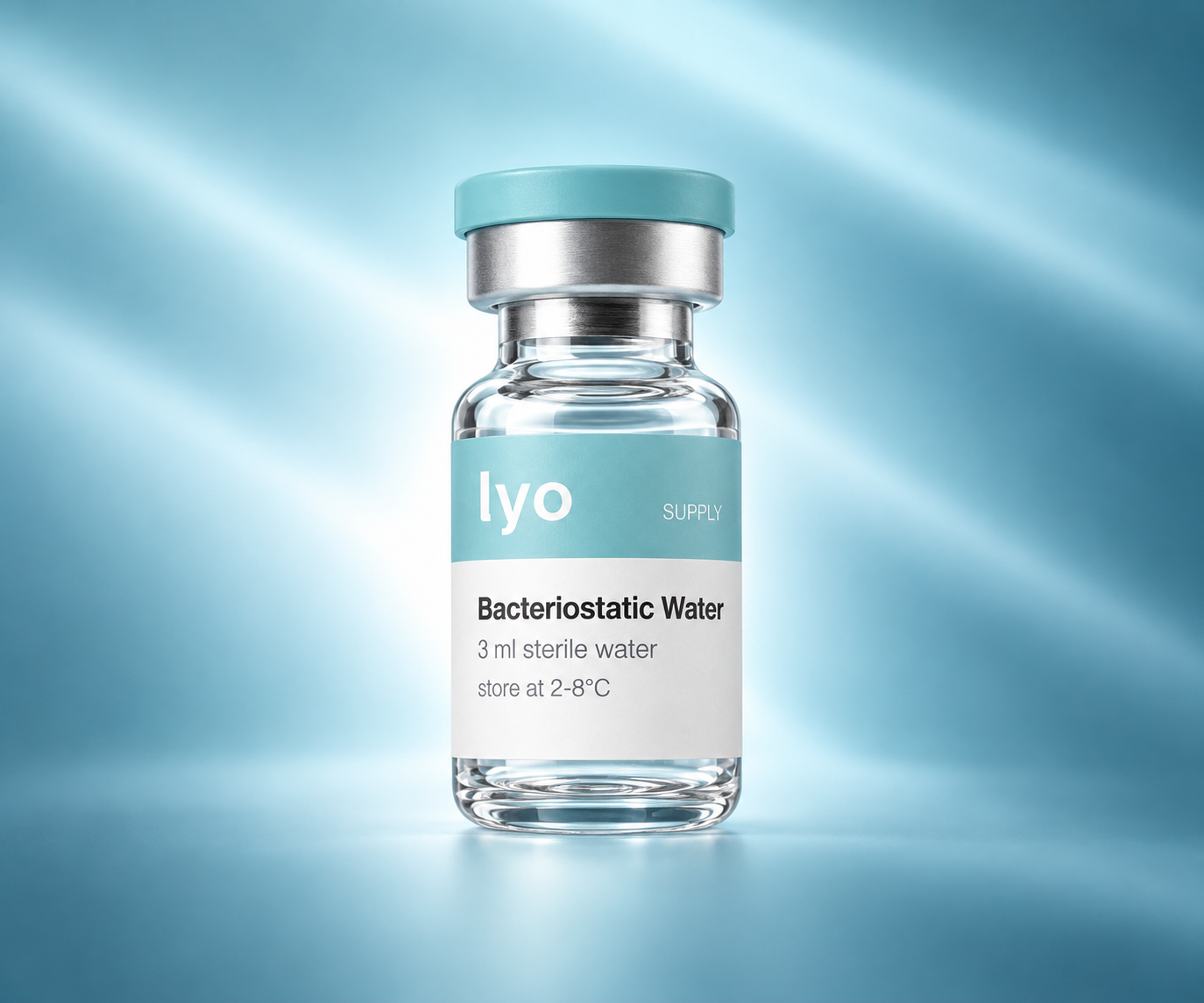
Vials, water, syringe and wipes — the four essentials in this guide.
What you'll need
Freeze-dried powder, sealed with a flip-off cap.
A 3 ml or 10 ml vial, for mixing the powder.
31G · 0.5 ml, with fine markings for measuring.
To clean the vial tops before you start.
Check your order contains the materials required by your research protocol before you start.
The steps
Wash your hands. Wipe the rubber top of both vials with an alcohol pad and let them dry.
Pull your planned amount of bacteriostatic water into the syringe. Use the calculator below to check the concentration for your chosen water volume.
Push the needle through the peptide vial's top and let the water run slowly down the inside of the glass — never jet it straight onto the powder.
Swirl the vial softly or roll it between your palms. Never shake. Wait until the liquid is completely clear.
Keep the mixed vial upright in the fridge at 2–8°C, away from light.
Use the mixing calculator below, or the free LYO LAB app, to get the exact concentration.
Mixing calculator
Enter your vial, water and amount to draw for concentration and U-100 units.
Units to draw
5units
Dilution math only — it sets no dose and is not medical advice. On any U-100 syringe, 100 units = 1 ml. Make sure the volume fits inside your syringe barrel.
Golden rules
Storage
Keep the sealed freeze-dried powder cool and out of light until you're ready. Follow the storage instructions for your batch.
Keep the mixed vial in the fridge at 2–8°C, upright, away from light. The app's Vials tab tracks how much is left.
Questions
The LYO LAB app
Today, Plan, Progress and Vials — track research entries and keep an eye on what's left.
Open the app
lyolabtracker.online